
Watching this moved me a lot. This was me growing up. This was me in every social situation that I came across. This is still me. I vigorously cut those cutouts and work very hard to fit myself in. It never worked perfectly and I ended up carrying so many of them with me. This is me. This made me both sad and happy.
Author: akbar
Ramblings on Ideas, Creativity, Technology, and Spirituality.
The Astronomer in Me
When I was a kid, I don’t know when exactly but I wanted to become an Astronomer. I used to tell people and the inner me that when I grow up I will be an Astronomer. It made me immensely happy. That kid in me was just dreaming up things. I used to visit my grandparents’ place – a remote village where people slept at 7pm and skies were clear – I could see million stars in the sky and never have to think that it won’t be possible to touch them one day. I was a dreamer.
As I grew up I changed my life goals. I switched from Astronomer to a Number Theorist. I was obsessed with numbers and would dream up numbers. Then came a phase where I dreamed up of being Physicist. Like a serious one. I even dreamed up of becoming an Astrophysicist! Sigh.
Tonight was an emotional night. I met a lot of friends and couple of drinks later, as I laid back in a hammock to witness the night sky with my daughter as I started to tell her stories of Moon and Stars – I witnessed a bright sky (8PM) and one single star. The ambient light of Oakland has let only one star to glow in the sky. It was a sad state. It moved me. It looked like my lonesome dream of Astronomer stuck in space time. It was pretty sad.
I spent some time on feeling nostalgic about it and realized that dreamy Astronomer boy is still within me. I had a very rare glimpse of that boy who would spend hours just staring at sky and wondering how they lit up, far far away. I miss that dude. I miss that Astronomer kid. Long time back when we moved into our new place I was excited that we have a new place and ample space to finally have our own Telescope to look at sky – but then Sangita mentioned – that in this country having a Telescope is creepy that you use to look into your neighbors houses! Thanks Hollywood for killing millions of kids dreams!
It’s ok. I can still look at bare skies and transcend into that kid who still has that gleam of excitement about being made out of stardust. I love looking up night skies and having that feeling.
Parenting through Incentives
Off late, I have noticed a weird behavior on my behalf. It is with respect to my daughter who is 2.5 years old. I have noticed 3 dominant reactive patterns of behavior in me. When I am trying to get something done by my daughter or make her to do something I usually do one of the 3 following things.
- I try to scare her by saying that I will withhold love. For example, I would say – “Ok, you don’t seem to be interested in getting ready for school – so I am leaving you here and going to my work”
- I try to compare or show preference to something/someone else. For example, I would say – “Ok, if you don’t get ready soon I will take Tina (her toy) to school and you will be at home”
- I try to cajole her with incentives. For example, I would say – “Ok, you can watch one show or you can eat one yogurt squisher if you get ready for school”
I know all those sound very brutal, but I have been so implicitly using them that it took me a while to catch myself doing it. I spent some time trying to understand where this stems from. I mean, these are learned behaviors which I am modelling for my child and she is going to learn them too. If you think about it – the above list can be easily modified and applied to how we do our jobs. A employer would basically make you work by –
- Scare – If you don’t do your job – you will be fired.
- Compare – The others are doing a better job than you.
- Compensate – If you finish this in half the time, you will get a bonus.
These methods involved in getting someone from point A to point B – seems universal. Upon digging a little deeper I realized there already exists a Strategy of Persuasion in Indian philosophy called – Saama, Dana, Bheda, Danda. Saama is Persuasion, Dana is bribing, Bheda is threat, Danda is punishment. There are 3 more in that list – Maya – deceit, Upeksha – ignoring, Indrajala – jugglery.
Not matter what other connections I find – in the moment I don’t feel right about this. I don’t think parenting can be done with above techniques. It’s easy to follow those techniques but I think it’s creating a bad model for your child. Unfortunately I don’t know (at this moment) what my alternatives are. I mean I don’t have any other ways to get my daughter inspired to do something. I am in a dilemma.
My Worst Fears
Couple of days back I had a great realization. I realized what my greatest fears are (and have been). I mean I kinda knew some – but this time I came across the core of them. We all have our own dark corners and I nurtured mine with complete denial and ignorance. It was culmination of what I have been reading and that one amazing video watched the night before. Here is the book –
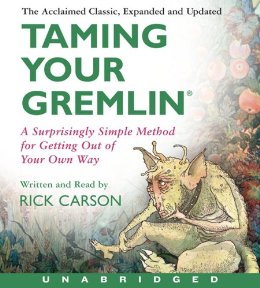 A simple and amazing book which talks a lot about how internal chatter creates these seemingly uncontrollable gremlins that we carry around and believe the picture they paint as true. It’s really hard to identify them as they usually become part of our identity and severely limit our scope to catch them in action.
The books premise is – there is a core in everyone of us. The pure core and then there are these gremlins. We are kinda slaves to these gremlins (if you watched Cloud Atlas, there is a perfect example of it in that movie. The “Old Georgie” is nothing but a personification of Gremlin). Gremlins control us based on a pattern. They keep us anywhere except the present and now. Obsess about past, fear the future – that’s gremlin talking.
I think that book needs to be re-read and re-read till we can clearly identify and sort out those gremlins. So, here are my worst fears.
1. The Fear of not fitting in : This is so much part of me that it was really, really hard to dislocate and watch it. Basically not fitting in for me means anything from clothing, accent, pronunciation, culture, politics, knowledge, humor, sports, finances, habits and everything else. I am so dreaded by the fact that I won’t fit into something that I will totally avoid anything if I have a slightest hint of not fitting in well. It’s a painful truth and probably has kept me off of many astounding opportunities in my life but yeah that is my fear and it’s part of me.
2. The Fear of not being nice : This is nuts as well. I hate to be one with conflicts. I mean internal conflicts I seed and grow a many but outer conflicts I can’t take it. I am so scared of not turning out to be nice to other people that I will actually avoid them rather be angry at them or even show even a hint of discontent. Once again this fear is part of me and defines me.
3. The Fear of not being smart enough : This is the most craziest and the more I dwelled into it the more I realized that this is a double edge sword. I hate to be not smart enough among a peer group. If I am among a bunch of smart people, I strive really really hard to act and do smart things. But on the other hand if I come across someone who is not as smart as I think they are – then I drop, I completely drop and “act” stupid to accommodate me. So, I act more smart and more dumb when required to fit into the above two fears.
Remember the question here is NOT “why am I this way?” Doing that encourages another gremlin and you lost your battle already. It’s just to put the fears out. Pull out these grotesque creatures I have nurtured and created since my childhood and just watch them. Just be aware of them and do nothing. As simple as it sounds, it’s one of the hardest things I have ever done. Just writing this blog post makes me think that I am publicly shaming myself and making vulnerable to outside world.
The video I talked about which helped me to figure out the above process is by Alan Watts. Here it is.
I created this blog to actually post stuff that surfaces in my psyche and in the past there have been many books and stuff I read that have helped me to identify these. Here are some of them that come to mind.
I just came across this gem – The Blerch is nothing but a Gremlin – http://theoatmeal.com/comics/running


Vivid Dreams
Ok this is weird but I think I realized a correlation recently. In the past few days – I am doing this news and feeds diet. Meaning, no reckless browsing on reddit, hufpost or facebook. It was hard first few days but I was getting more done! (I know, obvious right?) I wanted to keep that going and have been but something else has been happening. In the past 2 nights I have been having extremely detail and vivid dreams. It’s rare I see such a flurry of dreams so vivid and for so many days. When I woke up this morning I can remember a whole lineup of dreams and even though I slept for 7 hours my eyes were aching and didn’t want me to wake up.
I am not sure if these 2 things are related but may be all those neurons I am killing with aimless tech browsing are finally being utilized to provide entertainment during my sleep! I love it. 
Being Aware and Clear
As I journaled away my thoughts and complaints today I realized something good. I usually address my letter to Swami and pour out whatever is coming through. I think and treat him as if he is listening to me and sympathising with what I am saying. As I complained away – I realized or rather remembered that the point of power is within me and my complaints are actually shaping my very mindset about issues at hand.
I have always felt like that there is some secret mantra to life. I mean some kind of blueprint and pathway directing me every moment about what I should do next. But I don’t think there is any now. But how do I proceed through this jigsaw? I think there is only one way to it – As we are told about how being aware of our breath is a form of meditation (Thich Nhat Hanh talks a lot about this) so do I believe being aware of what I want in every moment is the only way of having a clarity in this life.
I know both aren’t easy and sound like they need a lot of work. I agree, but that is the only way to step back from our lives’ autopilot. You can think of 2 thoughts entwined – like when you become aware of your breath also ask – what do I want? Like in this specific moment. I may not have answer for all the moments and I may not remember to be aware of my breath all the time.
Again, it’s one way of living and passing through life’s various curved paths.
Like is the new Subscribe
First there was print media. Next came the Internet revolution and it got the 4th estate all riled up and they started out their websites. Blogs started complimenting the news and then came Twitter. People started to talk to each other using tweets and then the idea coalesced into leaders within Twitter providing information. The media was late to it but it joined eventually. The news started getting disbursed in 140 characters matching the 10 seconds attention span. Then came Facebook – colonizing the friendship graph. They pulled in all of us and all our friends and everyone we knew. Enticed us to “Like” each other’s stuff and encouraging activity, eyeballs and addiction. The media was late there as well, but now it’s catching up.
Facebook announced 2 major things last week. In video side of it’s 1 billion dollar acquisition of Instagram. Perfectly timed 15 secs (as opposed to 6 seconds on Vine) – matching the advertisement requirement, videos in your feed. Another thing is about Mark Zuckerberg’s passion to make Facebook as a place to get all your news. I think this is a genius move on Facebook’s behalf. I have literally stopped going to websites to read news – all I do is like them on their site when I visit them first time – and lo and behold I get all my news on my wall. Facebook turned it’s “Like” button into a “interested”, “permission to invade”, “subscribe me” button.
Pretty soon we will have news media saying – “Only available on Facebook“, “Watch it first on Facebook” – because that is where the action is. Because that wall you take for granted on Facebook is definitely a wall – a wall where you put your virtual TV on, a wall where you pin your address book on, a wall where you have your calendar on. Facebook wall is the new Desktop – it’s just that we are not aware of it yet. It’s here and it’s slowly creeping on us.
I feel sorry for Google and Apple – both companies still stuck in the old thinking and investing in good old media hardware – Google TV, Apple TV(the actual TV which is rumored). I feel sorry that Google dropped it’s Google reader which could have competed with Facebook wall. I feel sorry for Youtube Channels because you are way too far from my wall and need a new tab to visit you. It’s just a matter of time before we see HBO exclusive on Facebook wall.
This is how a simple Like turned into a mass consumption channel. A pathway to new consumers.
Sunday Book Review – Think Twice
2 years back when I was visiting India – I came across this cool book. I was more surprised to see Jeff Bezos saying some good words about this book. I believe Jeff Bezos is one of the smartest business man out there. I admire him for doing so much with so little (well until, Amazon started turning profits). I was kinda surprised to see him saying some good words about this book. I bought it but never got around to read it till now. I love this book. It does boil down some common thinking pitfalls and how to use counter intuition to overcome it. I wanted to write a review for it but I don’t want to write a long write up on it and use different tools to enhance the core concepts of this book. So here we go…

This book gives you 8 counter intuitive thinking tools. To make it simple I have them tabulated them. The author uses a lot of examples of sports and financial world throughout the book but I think these strategies can be employed anywhere.
1. The Outside View
Intuitive Thinking: Thinking that the problem you have is unique and needs a unique solution
Counter Intuitive Remedy:
- Collect these kinds of problems
- Check the success rate of solution
- If required draw a histogram
- Pick/Predict a solution
2. Open to Options
Intuitive Thinking: Tunnel vision, not considering alternatives. Incentives may enforce tunnel vision further.
Counter Intuitive Remedy:
- Explicitly consider the alternatives
- Seek Dissent
- Keep a log of previous decisions
- Don’t decide with emotions
- Check the incentives – for you, for others.
3. The Expert Squeeze
Intuitive Thinking: Our uncritical reliance on experts and their opinions
Counter Intuitive Remedy:
- Match the problem you face with most appropriate solution
- Seek diversity in solution space
- Use technology when possible – again, like creating a sample data and studying it.
4. Situational Awareness
Intuitive Thinking: Role of context in decision making. Not knowing how others influence us in picking a solution. Thinking that you are in control of the problem and only you decide everything.
Counter Intuitive Remedy:
- Be aware of the situation
- Consider the situation first and individual second
-
Watch out for the Institutional Imperative – coined by Warren Buffett – implies how companies blindly copy other companies.
-
Avoid inertia – periodically revisit the processes.
5. More is Different
Intuitive Thinking: Pitfalls of understanding complex systems at a wrong level
Counter Intuitive Remedy:
- Consider the system at the correct level
- Watch for tightly coupled systems
- Use simulations to create virtual worlds
6. Evidence of Circumstance
Intuitive Thinking: Predicting cause and effect for system based on attributes rather than circumstances.
Counter Intuitive Remedy:
- Ask whether the theory behind your decision making accounts for circumstance
- Watch for the correlation-and-causality trap
- Balance simple rules with simple conditions
7. Grand Ah-Whooms
Intuitive Thinking: Phase transitions, assuming that small changes to a system don’t mean anything
Counter Intuitive Remedy:
- Study the distribution of outcomes for the system you are dealing with.
- Look for ah-whooms moments – the small changes that lead to big ones.
- Beware of forecasters
- Mitigate the downside and capture the upside
8. Sorting Luck from Skill
Intuitive Thinking: Not knowing the role of skill and luck in outcomes and to what measure.
Counter Intuitive Remedy:
- Evaluate the mix of skill and luck in the system you are analyzing
- Carefully consider the sample size
- Watch for change within the system or of the system
- Watchout for the halo effect
Books
I am a little nuts about books. I buy a lot of them, read a lot of them and always keep thinking about what that book I saw other day is trying to say. But what I noticed is that I read books for 2 reasons – one is just for pleasure (like 2001 Space Odyssey) and another is to learn more about certain thing. The 2nd part is where I am having some issues off late. I mean I read it, write down and take notes but then after a while I forget all about it. I always wanted to do book reviews and use that as an anchor to retain certain stuff with me. I am going to do that starting from tomorrow. Every Sunday I will write-up a review of a book. I know 50 books is a way too small a number for the amount of books I own, but it’s a start.
Microfinance – Good, Bad and Ugly
Microfinance is a one of those ideas which has been around for a long time but people have shown a lot of interest in it only recently (trend link). Now a days most people understand what it is and usually have lot of positive things to say about it. But like any other idea, it has those 3 sides – good, bad and ugly. I stumbled up on the last 2 only in the past few weeks. After reading Yunus‘s book – it was very inspiring to learn about Microfinance and how it is going to pull a lot of people out of poverty. I was a very firm believer in that. But I think the reality is far different than what we find in books.

The other 2 books in context are – “A fistful of rice” by Vikram Akula and “Confessions of a Microfinance heretic” by Hugh Sinclair.


Vikram Akula was a poster child of Microfinance – couple of years back, in 2007 when I learned about him – I was so inspired and I had dreams of going back to India and working for SKS Microfinance. I sent emails to SKS Microfinance about it but never heard back. The technology stack was all .NET so I couldn’t find a way to work for them. Later in 2008 I attended a talk by Vikram Akula at University of Chicago and was completely inspired. As I read his book – which showcases all the troubles he faced to start his firm – it stuck me how he was forgetting the basic tenets of Microfinance. He has been working in it for almost 10 years and was dreaming up to connect Microfinance with capitalistic market based profit making companies. His idea is cool on paper, but the implementation is wrong.
When you get to poor people who are way below the poverty line and you offer them these micro-loans – the core idea should be helping them. Just helping them. Not even thinking in terms of “Oh, I am here to rescue you out of your poverty-ness”. No. Just helping them and showcasing them certain best practices is what one can do. There is no way one person, one system can massively move people out of poverty. If you think a little deeper – the systems which we have in place are enablers of this poverty and poor people. Nothing within the system can really fix it. But if we go around trying to do so – it would be a failure.
Which is exactly what happened to Vikram Akula’s SKS Microfinance. Even though Yunus never liked linking Microfinance with for profit making companies – he couldn’t stop Akula. And in 2010 – SKS collapsed. When a lot of poor people who borrowed money and couldn’t pay back – started committing suicides – the AP Govt passed a law to ban all microfinance activity in the state, thereby bringing down SKS. When you bring in investors who are looking for returns there is going to be a pressure on the company to churn profits always. This in turn will put pressure on the micro lenders to perform better which is passed on to the poor people who are already struggling to survive.
Hugh Sinclair explains it much better in his book. He worked in various microfinance firms for about 10+ years and saw how the reality mismatches with the fantasy story that everyone is weaving around him. Poor people are struggling but they are also human. They have desires as well – the money they started to borrow – got used for one time entertainment values rather than use it as an investment. If you are poor and hungry, a entertainment is far more distracting than a entrepreneurial thought. They do want to get better but after their basic needs are met. So any money thrown at them will first go towards their basic needs and then to uplift yourself. Maslow talked about this so long ago. Sinclair also talks about how big banks have gotten into microfinance which is a $70 billion market and trying to make hay day out of it. In all this Grameen Bank (not Grameen Foundation – checkout the comment by Hugh below!) is an exception. It also functions as a bank, because of some laws passed in Bangladesh and may be that is the way to go. A Microfinance company can become a bank after certain time or reaching targets and then start thinking of profits- rather the other way around where the big banks get in with sole motive of making profits on the back of struggling poor.
My next book I am planning to read is – Fortune at the Bottom of the Pyramid – which Akula says was his inspiration to try to make a profitable public company on top of idealistic mico lending company.

 akbar's blog